


Whether derived from pressed crude oil or solvent-extracted crude oil, rapeseed oil can only meet food safety standards and long-term stability requirements through a standardized refining process.
The refining section is the key stage that determines final oil quality grade and overall market competitiveness.
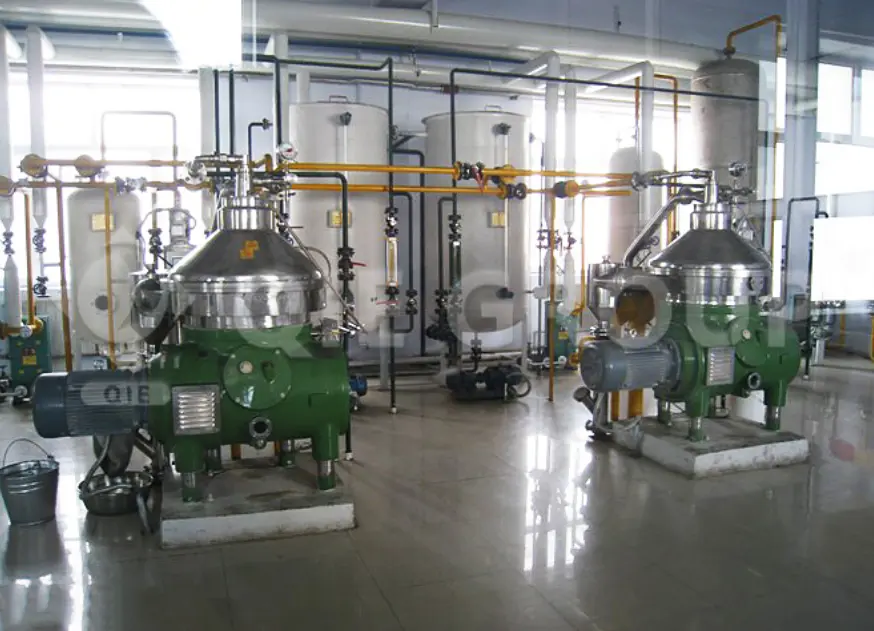
🧪 Based on 43 years of edible oil engineering experience, QIE GROUP has developed a mature continuous rapeseed oil refining process, covering core steps including Degumming, Deacidification, Decolorization, and Deodorization, with optional Dewaxing (Winterization) systems configured according to product requirements.
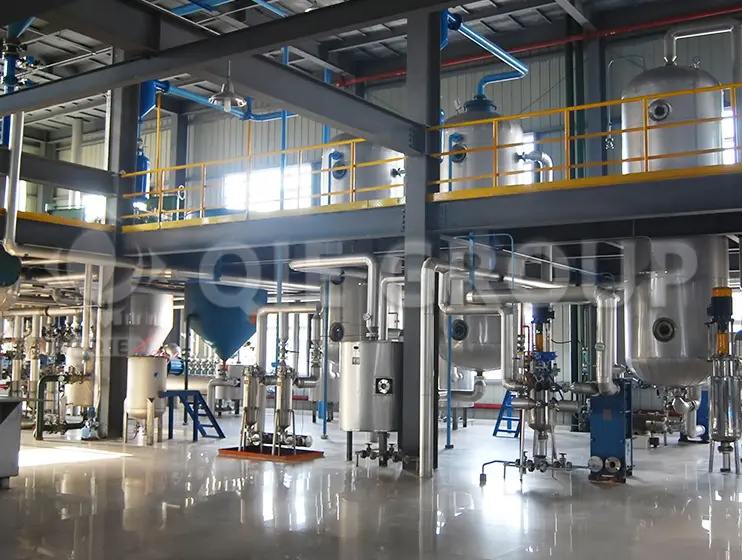
🔹 During degumming and deacidification, hydration or acid degumming combined with alkali refining or physical deacidification effectively removes phospholipids and free fatty acids, ensuring stable acid value control;
🔹 In the decolorization section, activated bleaching earth or activated carbon adsorbs pigments and residual impurities, producing a clear and stable oil color;
🔹 The deodorization process operates under high temperature and high vacuum conditions. Variable-temperature or dual-temperature deodorization technology improves smoke point and oxidative stability, while strictly controlling the formation of trans fatty acids and glycidyl esters;
🔹 For premium product positioning, a dewaxing (winterization) process can be added to ensure oil clarity and stability under low-temperature storage conditions.
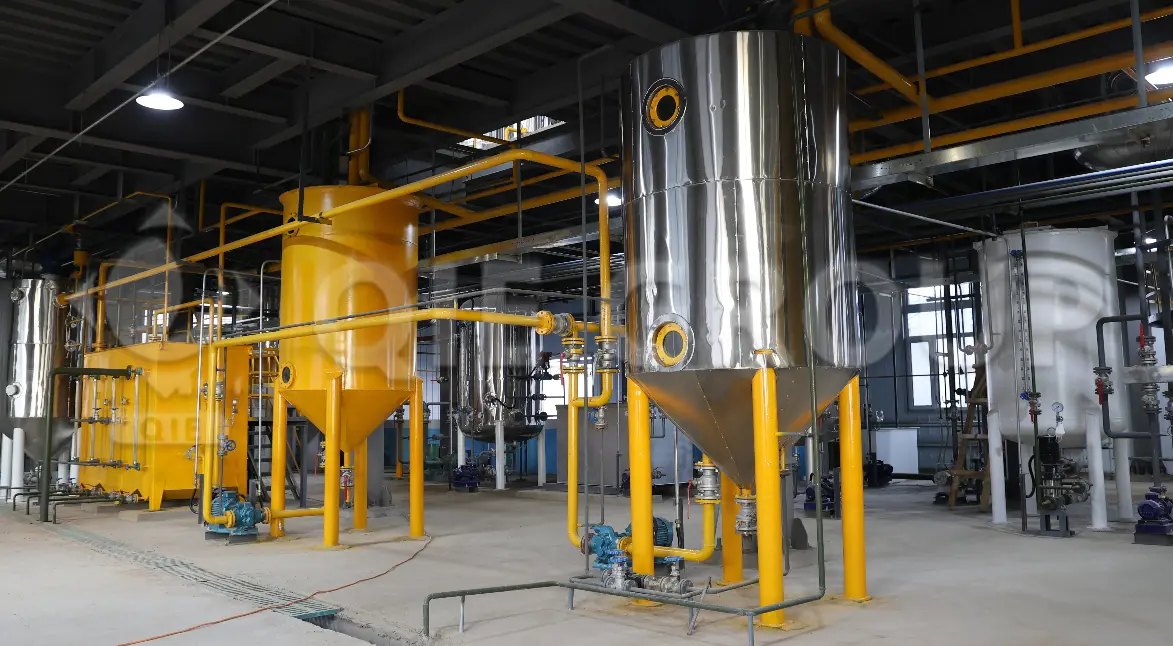
📈 Only with a scientifically designed refining process can rapeseed oil maintain consistent quality over the long term.
If you are planning or upgrading a rapeseed oil refining plant, QIE GROUP welcomes in-depth discussions to provide a customized, one-stop edible oil refining solution tailored to your project needs.
Please feel free to leave your needs here, a competitive quotation will be provided according to your requirement.


