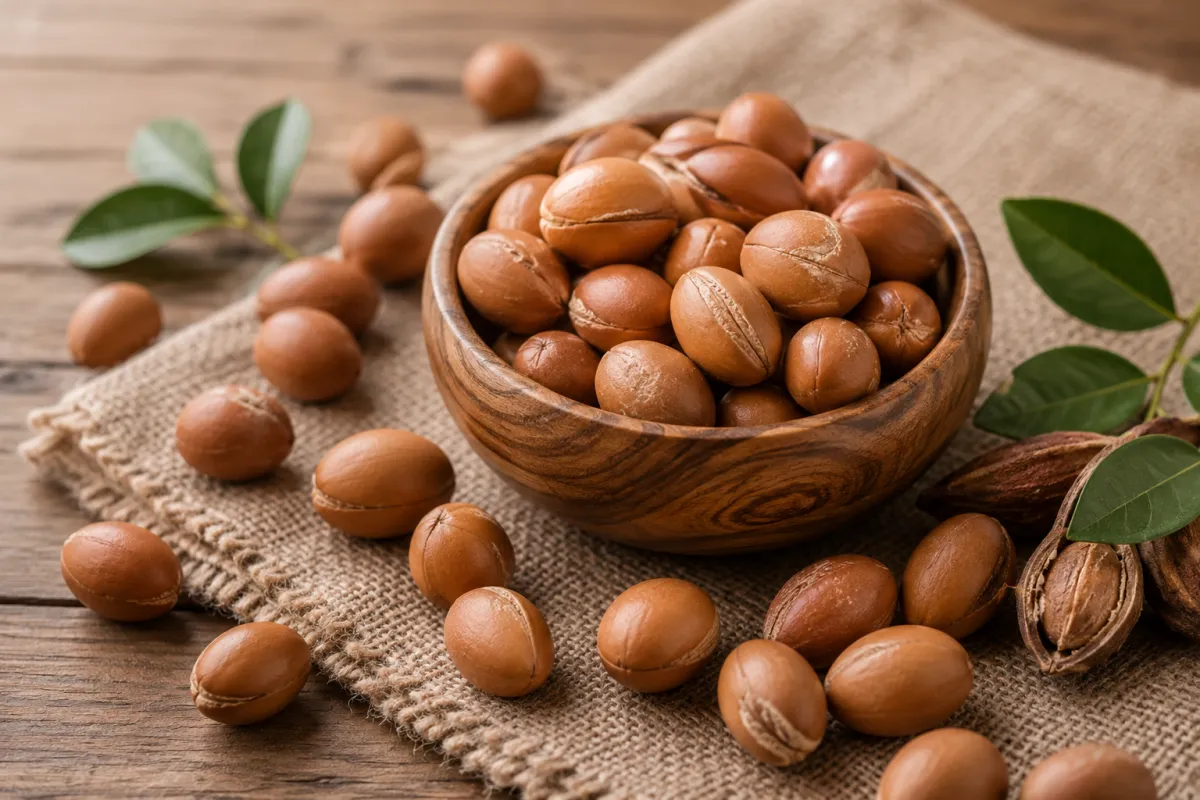
The core objective of peanut oil refining is to remove gums, free fatty acids, pigments, and odors from crude oil without damaging its nutritional value, ensuring safer, more stable, and higher-quality finished edible oil.
🔹 The standard refining process includes: Degumming → Deacidification → Decolorization → Deodorization,Depending on product positioning, the refining route may vary:

🥜 Aromatic Peanut Oil (Flavor-Oriented Processing)
Degumming: Cold filtration is applied to remove most phospholipids, improving oil clarity while preserving the characteristic roasted peanut aroma.
Deacidification: Usually omitted; the acid value is controlled within standard limits.
Decolorization: Optional or mild decolorization to retain the natural amber color of peanut oil.
Deodorization: ❌Not applied. Deodorization is avoided to preserve the signature roasted fragrance of aromatic peanut oil.

🥇 Grade One Peanut Oil (Clarity and Stability-Oriented Processing)
Degumming: Hydration or acid degumming combined with centrifugal separation to thoroughly remove phospholipids.
Deacidification: Alkali refining or physical distillation is adopted to ensure the acid value meets quality standards.
Decolorization: Adsorption using activated bleaching earth to achieve a bright and clear oil appearance.
Deodorization: High-temperature, high-vacuum distillation removes odors and unstable components, improving smoke point and extending shelf life.

Looking to build a more efficient and stable peanut oil refining production line? 👉(Refining Equipment and Its Role in Edible Oil Clarity)
QIE GROUP provides complete edible oil refining equipment and customized peanut oil processing solutions, supporting consistent quality across different product grades. 🌟
Please feel free to leave your needs here, a competitive quotation will be provided according to your requirement.