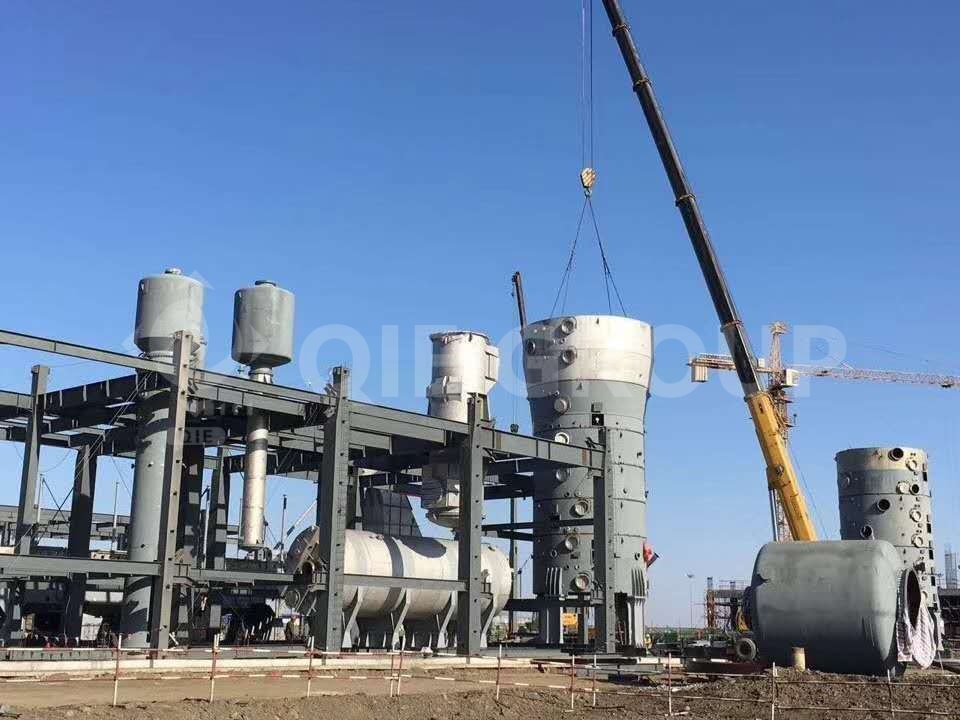
QIE GROUP provides engineering-driven soybean oil refining process solutions and refining equipment that remove impurities from crude oil and deliver safe, stable, clear edible oil with lower energy use, controlled oil loss, and reliable project execution.

Soybean oil refining process is the controlled treatment of crude oil obtained from pressing or solvent extraction to remove gums, free fatty acids, pigments, odor compounds, trace metals, peroxides, and other undesirable substances. The objective is to convert crude oil into safe, stable, clear, bright edible oil that meets target product specifications and supports stable industrial operation.
QIE GROUP provides engineering-driven edible oil refining solutions and oil refining equipment for continuous production lines. The solution combines process design, equipment manufacturing, PLC + SCADA automation, installation, commissioning, and operator training under one engineering system, helping edible oil producers balance product quality, refining loss, energy use, and long-term plant reliability.
Remove impurities from crude edible oil and deliver food-grade refined oil with stable appearance, odor, oxidation resistance, and processing performance.
Soybean, palm, sunflower, rapeseed, peanut, rice bran, corn germ, and other oil-bearing materials.
QIE GROUP supports refining-related engineering within edible oil projects from 100 TPD to 5000 TPD.
40+ years of edible oil engineering experience and 1000+ projects delivered across 100+ countries and regions.
Crude oil from pressing or extraction contains impurities that directly affect storage stability, color, odor, smoke point, downstream filling performance, and final marketability. In industrial production, refining is not only a purification step. It is a process control system that determines whether the plant can produce refined oil consistently while maintaining acceptable operating cost and controlled oil loss.
The QIE GROUP Soybean Oil Refining Process Solution is a structured refining system used to convert crude edible oil into finished oil through coordinated process stages, integrated equipment selection, and automated process control. This solution is suitable for new plant construction, capacity expansion, process upgrading, and continuous edible oil processing projects.
The solution typically covers degumming, deacidification, bsolvent extraction, and deodorization, with auxiliary vacuum, heat exchange, filtration, steam, and automation systems configured according to crude oil quality, target standard, and plant capacity. For projects requiring broader processing coverage, QIE GROUP can integrate refining with pretreatment, pressing, solvent extraction, dewaxing, fractionation, protein deep processing, and PLC + SCADA control into one EPC delivery framework.
A continuous oil refining plant usually follows four core process stages. The exact configuration depends on crude oil quality, acid value, target product requirements, and whether chemical or physical refining is more appropriate.
| Process Stage | Main Purpose | Typical Equipment | Engineering Significance |
|---|---|---|---|
| Degumming | Remove phospholipids and colloidal impurities | Disc centrifuge, dosing and mixing system | Protects downstream thermal stages and improves oil stability |
| Deacidification | Reduce free fatty acids and lower acid value | Deacidification tower, distillation tower, mixer, centrifuge | Directly influences refining loss, operating route, and finished oil quality |
| Bsolvent extraction | Remove pigments, residual soap, and trace metals | Vacuum bsolvent extraction tower, leaf filter | Improves appearance and prepares oil for deodorization |
| Deodorization | Remove odor compounds, peroxides, and residual FFA | Vacuum deodorization tower, steam stripping system | Defines final flavor purity, smoke point, and oxidative stability |
Degumming is the first purification stage in edible oil refining. It is used to remove phospholipids, mucilage, and other colloidal impurities from crude oil. These substances can create sediment, darkening, and unstable behavior during later heating and deodorization.
The common route is hydration or acid-assisted treatment followed by centrifugal separation. A high-speed disc centrifuge is the core separation unit. This stage improves feed quality for the next refining steps and reduces the risk of fouling or unstable heat transfer.
Deacidification is one of the central quality control stages. It is used to reduce free fatty acids and lower the acid value of crude oil. The route is selected according to crude oil quality and target refining standard.
Chemical neutralization uses alkali to react with free fatty acids, followed by soapstock separation through mixing and centrifugation. Physical refining removes free fatty acids during the deodorization stage through high-temperature and high-vacuum steam distillation. In many modern applications, physical refining is preferred because it can reduce oil loss and avoid soapstock wastewater generation when crude oil quality is suitable.
Bsolvent extraction is the adsorption-based purification stage. It removes chlorophyll, carotenoids, residual soap, oxidation products, and trace metal ions that can affect color, oxidation stability, and final product acceptability.
This process is typically carried out under vacuum and controlled temperature using adsorbents in a vacuum bsolvent extraction tower, followed by solid-liquid separation through a leaf filter. Proper bsolvent extraction improves oil brightness and creates more stable feed conditions for deodorization.
Deodorization is one of the final and most critical refining stages. It removes odor compounds, peroxides, and residual free fatty acids to produce oil with clean flavor, improved smoke point, and stable final quality.
The process is carried out in a vacuum deodorization tower, generally a multi-tray or staged tower, using direct steam stripping under high temperature and high vacuum conditions. Typical operating conditions described for this stage are around 220–260°C and 1–2 mmHg absolute pressure, depending on oil type and process design.
This stage has direct impact on final odor profile, oxidative stability, and product specification compliance. It is also a key stage for advanced process control where heat balance, vacuum stability, and steam distribution need close coordination.
PLC + SCADA control system is the digital operating layer of the refining plant. It is used to monitor and coordinate temperature, pressure, flow, output, and energy consumption in real time. In edible oil refining, automation is important because stable product quality depends on stable process conditions across multiple thermal and separation stages.
QIE GROUP integrates process design, refining equipment manufacturing, installation, commissioning, and training within one engineering framework. This reduces coordination gaps between process sections and supports more predictable project execution.
The refining route is selected according to crude oil characteristics and target product requirements. This engineering approach helps control unnecessary refining loss, improve utility efficiency, and maintain process consistency across different oil-bearing materials.
The system provides real-time visibility of critical variables such as temperature, pressure, output, and energy use. This supports process optimization, operating discipline, and more stable product quality.
A unified EPC project system reduces the interface risks associated with multiple suppliers. QIE GROUP manages project execution from engineering design to site commissioning, helping maintain controllable risk and more reliable schedule performance.
| Performance Area | Solution Approach | Expected Engineering Value |
|---|---|---|
| Impurity Removal | Integrated degumming, deacidification, bsolvent extraction, and deodorization | Safer, clearer, and more stable edible oil |
| Energy Efficiency | High-vacuum system, efficient heat exchangers, heat recovery | Overall refining energy consumption reduction of 10–15% as described in the process design basis |
| Oil Loss Control | Optimized parameters and equipment matching | More controlled refining loss during continuous operation |
| Automation | PLC + SCADA process monitoring and control | Improved process stability and operational visibility |
| Product Quality | Refining route selected according to crude oil quality and target standard | Refined oil that aligns with client-specified quality targets for FFA, moisture, color, odor, and peroxide-related indicators |
Edible oil refining solution performance depends not only on individual machines, but also on engineering coordination across civil layout, utilities, thermal integration, automation, installation quality, and startup management. QIE GROUP executes projects through an in-house system that combines process engineering, manufacturing, site work, and technical support.
40+ years of technical accumulation in edible oil engineering, supported by provincial and national R&D and intellectual property platforms.
1000+ edible oil processing projects completed across 100+ countries and regions, with experience in different raw materials and operating conditions.
Manufacturing is carried out under ISO quality management execution and pressure vessel manufacturing standards, supported by commissioning areas for complete equipment verification.
EU CE certification for vegetable oil production line in 2020, along with multiple engineering research center approvals and innovation recognitions.